
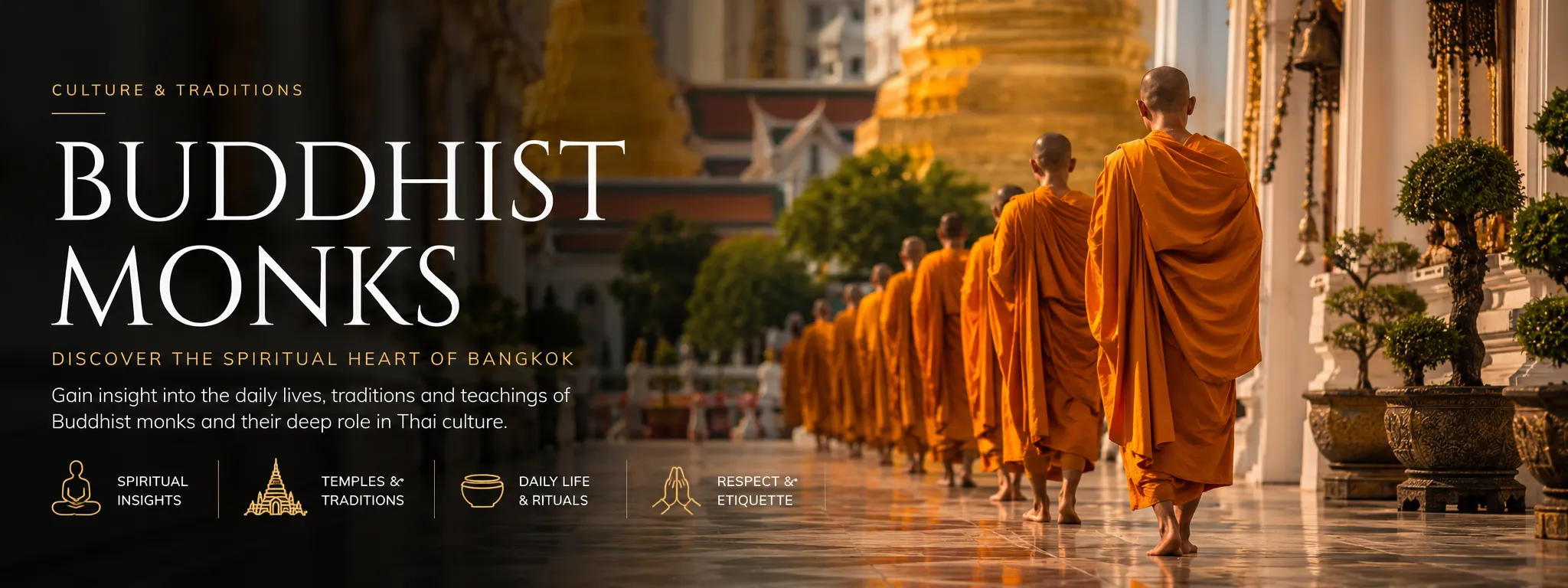
Orange-robed monks are part of Bangkok's daily scenery — understanding their role enriches every temple visit.
Around 300,000 monks in Thailand; some ordained for life, many for a temporary period (weeks or months) as a rite of passage for young men.
Monks walk silently at dawn collecting food from devout laypeople — a profound daily ritual still observed in residential areas; tourists should observe quietly and respectfully.
Women must never touch monks or hand them anything directly; men may speak respectfully; always let monks pass first; never point feet toward a monk.
Most Thai men ordain for at least a few weeks in their lifetime — it's common for a son to ordain when a parent dies; the temporary ordination period is considered meritorious.
Thai monks follow 227 precepts (the Vinaya) covering everything from diet (no eating after noon) to interaction with women (no physical contact) — visitors don't need to know the full code, but understanding that these rules are taken seriously explains behaviour that might otherwise seem standoffish.
Monks walk a fixed route each dawn collecting food from laypeople — this isn't begging in any negative sense, but a structured daily practice that gives both monk and giver an opportunity to generate merit.
Male visitors can converse respectfully with monks; female visitors should avoid direct physical contact and generally let the monk initiate conversation — a respectful distance and a wai greeting are always appropriate regardless of gender.