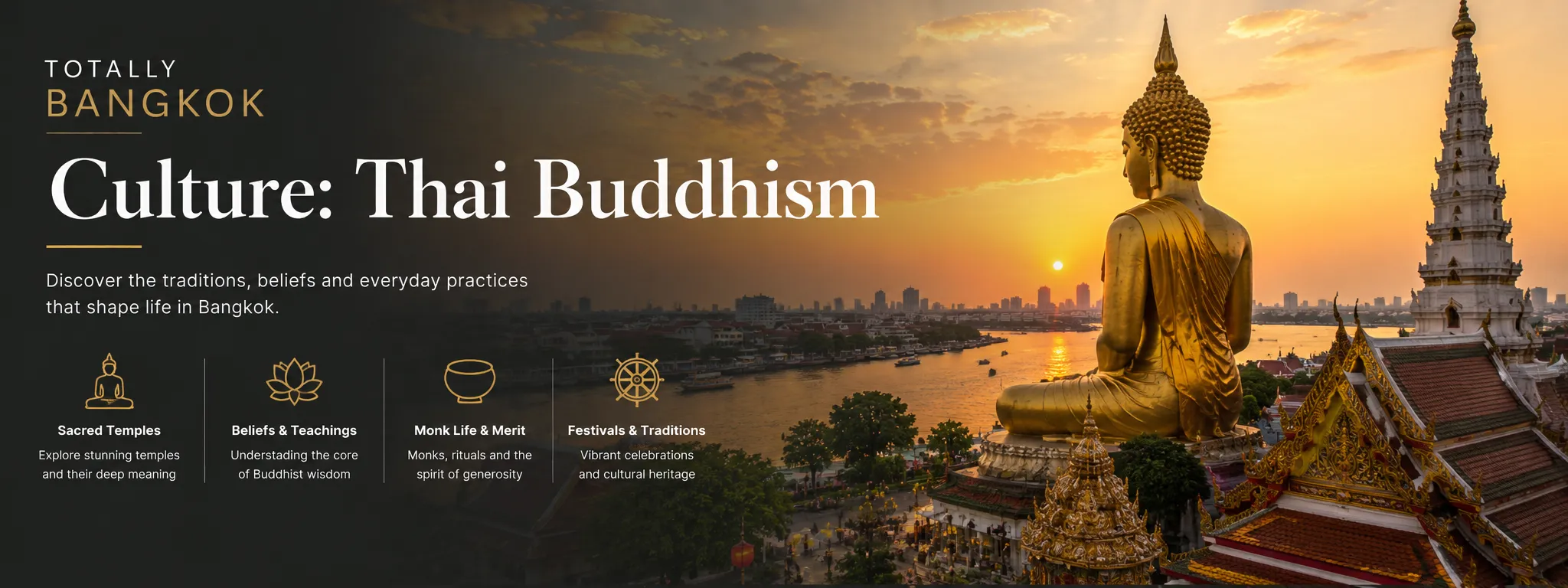
Buddhism shapes daily rhythm, architecture and etiquette throughout Bangkok.
Morning alms-giving to monks, temple visits on Buddhist holy days, and merit-making are all part of everyday life in the city.
Modest dress covering shoulders and knees, removing shoes before entering temple buildings, and quiet behavior are expected at all times.
Roughly 93% of Thais identify as Theravada Buddhist, and it shows in the texture of everyday life rather than just in temple visits — spirit houses outside office buildings, monks riding the BTS in the early morning, small shrines tucked into shopping malls, and the constant presence of amulets worn under shirt collars.
The central practical concept is merit — good deeds that improve one's karma and circumstances, both in this life and the next. Offering food to monks, donating to temples, releasing caged birds, and even everyday kindness are all framed as merit-making; it's less a weekly obligation and more a running practice woven through the week.
Unlike most Buddhist traditions, Thai Buddhism has a strong custom of temporary ordination — many Thai men spend anywhere from a few days to several months as monks at some point in their life, often timed around a parent's death or a major life transition, then return to lay life afterward without any stigma.
Understanding the merit framework explains a lot of what visitors see: why monks never say thank you for alms (the giver is the one gaining merit), why temples are simultaneously spiritual sites and social hubs, and why Buddhism in Bangkok feels woven into daily commerce and family life rather than confined to a single day of the week.