
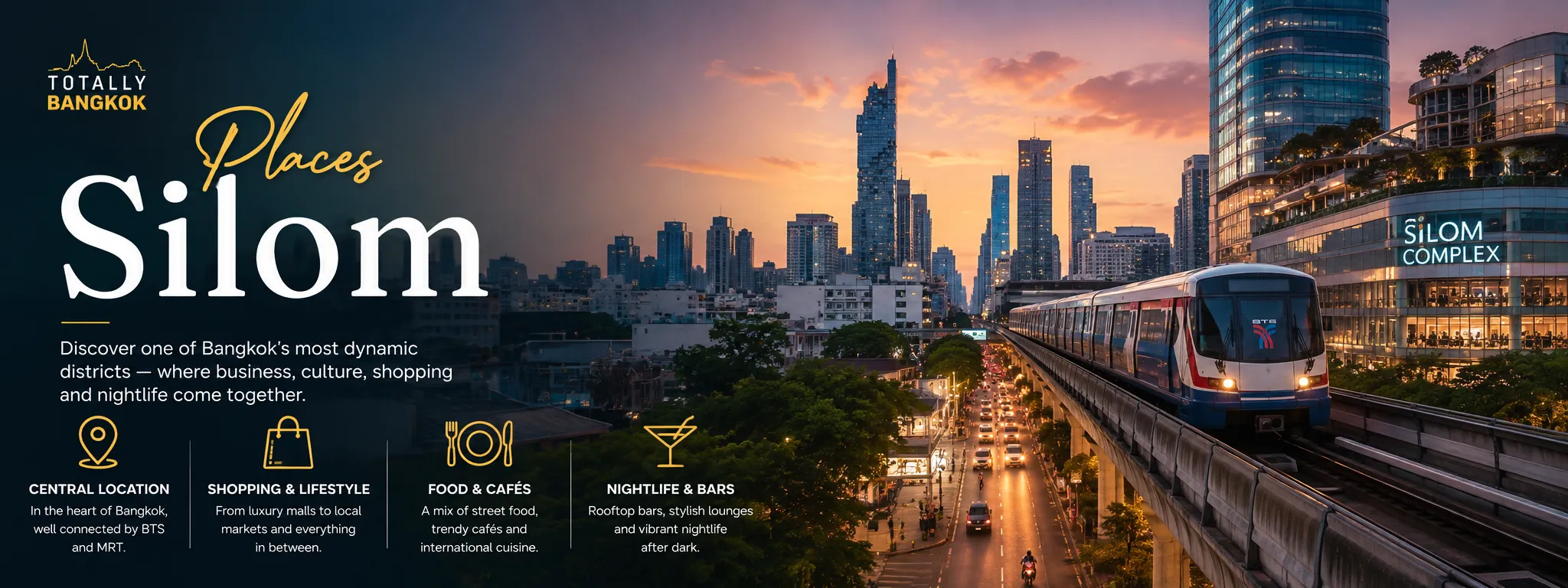
Silom and Sathorn combine Bangkok's office core with Lumphini Park, strong BTS/MRT connections, hotels, restaurants and several very different evening scenes.
Visitors often group Silom and Sathorn together because the districts sit side by side and share transport, hotels and business activity. Silom Road is busier and more commercial at street level, with shops, offices, food and nightlife. Sathorn, immediately south, has more embassies, office towers, hotels, residences and destination restaurants spread along broad roads and side streets.
Together they form one of Bangkok's most useful bases for travellers who want central transport without staying on Sukhumvit.
Silom/Sathorn works especially well if your plans include the Chao Phraya River, Chinatown, Lumphini Park, central business meetings or restaurants around Bang Rak and Charoen Krung. BTS Sala Daeng and MRT Si Lom provide an excellent interchange near Lumphini, while BTS Chong Nonsi serves the Sathorn office corridor.
The atmosphere can also feel more varied than lower Sukhumvit: office workers dominate at lunch, local food stalls and restaurants fill the side streets, and nightlife is concentrated in specific pockets rather than along the entire district.
BTS Sala Daeng sits on the Silom Line and connects with MRT Si Lom. For visitors, this interchange is the district's biggest advantage. BTS is useful westward toward the river and north toward Siam via the line network; MRT is useful toward Sukhumvit, Chinatown and other Blue Line areas.
If you are choosing a hotel mainly for sightseeing, a walkable route to Sala Daeng/Si Lom can be more useful than a luxury address deeper in Sathorn that requires road transport for every trip.
Lumphini Park is the district's most important daytime asset. Bangkok Metropolitan Administration lists the park as a large multi-purpose public space and currently gives daily opening hours of 04:30–22:00. The official transport information lists Sala Daeng on the Green Line and Si Lom/Lumphini on the Blue Line as rail access points.
Go early for cooler temperatures, walking and running, or use the park late afternoon before dinner. In the middle of a hot day, the shade helps but the heat can still be significant.
Weekdays show Silom at its most functional. Office workers pour into food courts, canteens, street stalls and cafés around lunchtime, while banks and commercial buildings dominate the main road. This daytime rhythm is easy to miss if you visit only for Patpong after dark.
For food-focused travellers, weekday lunch can be one of the best times to explore because businesses are serving local office demand rather than only tourists.
Patpong is one of Bangkok's best-known nightlife zones and includes bars, adult entertainment and a night-market environment. It is not representative of the entire Silom district. Visitors who are curious can walk through, but there is no reason to treat it as a must-do.
Be cautious with any venue where prices, minimum charges or show fees are unclear before ordering. If a bar experience feels uncomfortable or opaque, leave and choose somewhere with straightforward menus and pricing.
Silom also has a prominent LGBTQ+ nightlife scene, especially around Silom Soi 4 and nearby streets. The atmosphere differs markedly from Patpong, with bars, terraces and late-night venues drawing both local and international crowds.
Venue formats and opening patterns change, so use current venue information rather than relying on an old list of “best bars”. The neighbourhood itself remains the useful planning anchor.
Sathorn tends to feel more spread out and less retail-heavy than Silom. It is a strong choice for travellers who prefer a sophisticated hotel base, destination restaurants and quieter evenings, but exact location matters. Some Sathorn addresses are easy walks from BTS or MRT; others sit deep on roads where taxis become the default.
If your hotel is marketed as “Sathorn”, check the nearest station and walking route before booking. Bangkok road distances can look short on a map and still be inconvenient on foot.
BTS Chong Nonsi is a useful station for the central Sathorn office area and gives easy access back toward Sala Daeng and Siam. The elevated pedestrian infrastructure around the station also makes some crossings easier than at street level.
For business travellers, Chong Nonsi can be a better base than Sala Daeng if meetings are concentrated in Sathorn. For leisure visitors, Sala Daeng's MRT interchange gives it the edge.
The Silom Line continues west toward the Chao Phraya corridor, making this side of Bangkok easier to combine with river travel than central Sukhumvit. Depending on your destination, rail plus boat can be a sensible way to reach riverside attractions while avoiding some road traffic.
Check current boat routes and piers before relying on a specific service late in the day; river operations are not identical across all boats.
MRT Si Lom is the simplest rail link from the district to Chinatown: take the Blue Line toward Wat Mangkon. Continue farther for Sam Yot or Sanam Chai when heading toward Old City attractions. This direct underground connection is one reason Silom works so well for a mixed sightseeing itinerary.
For the Grand Palace, the final approach still requires walking or another local connection, so leave a buffer for timed entry.
The area is strong across several price levels. Daytime office demand supports inexpensive Thai lunches and food courts; evenings bring restaurants, hotel dining, cocktail bars and fine-dining destinations. Bang Rak and Charoen Krung nearby expand the choices further.
Instead of crossing Bangkok for every famous restaurant, pick one evening around Silom/Sathorn and let the neighbourhood do the work. It is especially effective after a late-afternoon walk in Lumphini Park.
Several famous rooftop venues are in or near the broader Silom/Sathorn/Bang Rak area. They can deliver exceptional city views, but they are not casual observation decks. Dress codes, minimum spending and weather closures vary. Check the venue's own current policy before travelling across town dressed for the wrong setting.
During storms or strong wind, outdoor sections may close. Do not make a rooftop reservation your only evening plan in unstable weather.
Families can do very well near Lumphini Park or in a hotel with direct rail access, especially if they want green space between sightseeing days. The areas immediately around nightlife streets are less appealing for families who want quiet evenings.
For a calmer stay, choose the Lumphini/Sathorn side rather than Patpong-facing blocks. Check room soundproofing and the exact walking route to transit.
Rail lifts and elevated walkways improve some journeys, but street-level accessibility remains inconsistent. Kerbs, driveway crossings, vendors and uneven footpaths can complicate a route that looks straightforward on a map. If step-free access is essential, verify the specific station exit and hotel entrance rather than relying only on a district label.
Lumphini Park offers a much easier walking environment than the surrounding main roads and can be valuable for travellers who need a break from crowded pavements.
Early morning is best for Lumphini Park. Weekday lunch shows the office district at full energy. Late afternoon works for park plus dinner. Evening is when Patpong and Silom's bar areas become active. A single long visit can move through several of these personalities without much travel.
Start around Sala Daeng, walk or ride to Lumphini Park, then return toward Silom for a late lunch or coffee. Continue into nearby commercial streets and, if nightlife interests you, stay into the evening. Alternatively, take BTS toward the river for sunset and return later for dinner.
This is better than trying to combine Silom, Sukhumvit and Chinatown in one afternoon.
Choose Silom if you want the strongest rail interchange, busy streets, nightlife options and easy access to Lumphini. Choose Sathorn if you prefer a quieter upscale base, business access and destination dining. Choose Sukhumvit instead if most of your evenings are east of Asok; choose Chinatown if food and Old City access matter more than modern nightlife.
For current rail layout, see the official BTS network. For current Lumphini information, use the Bangkok Metropolitan Administration public-space listing.