
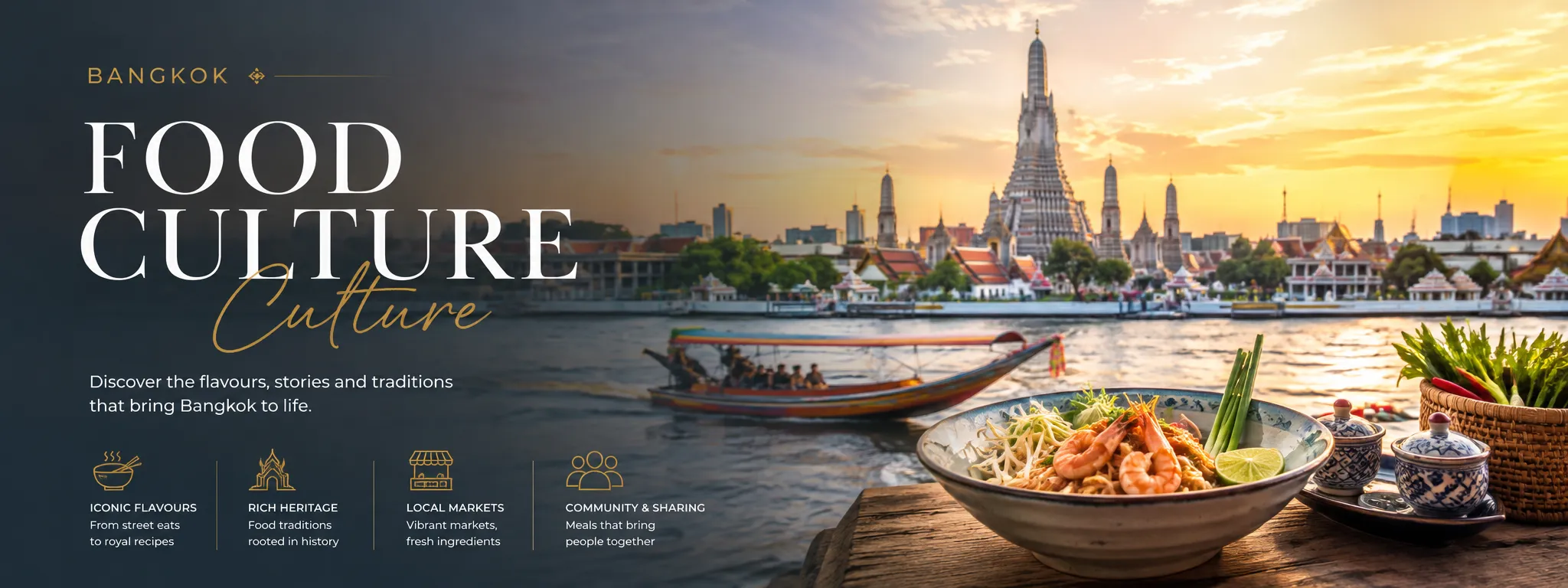
Why Thais eat the way they do, how meals are structured, and the unspoken rules around food.
Thai meals are shared — dishes arrive at the table for everyone; eating solo is common too (street food) but restaurants expect sharing.
Kin khao means 'eat rice' — rice is the center of every meal; noodles are the alternative (especially at lunch); the absence of rice is notable.
Thai cuisine balances all four simultaneously — a good dish has all four present; sweetness from palm sugar, sourness from tamarind or lime, salt from fish sauce.
Most Thais eat street food at least once a day — the culture of home cooking is less dominant than in Western countries; neighborhood stalls are the kitchen for millions.
Food is offered to monks (during morning alms), at spirit houses, and in Buddhist ceremonies — it's sacred, not just sustenance.
Every meal builds around rice — the traditional greeting "gin khao reu yang?" literally translates to "have you eaten rice yet?" rather than a generic "how are you," reflecting how central rice is to the language of daily life.
Thai meals are typically ordered as a group of shared dishes placed in the centre of the table rather than individual plates — ordering one dish "for yourself" at a group meal is unusual and can seem antisocial.
The famous Thai balance of sweet, sour, salty, and spicy isn't about maximum intensity in any one direction — the best Thai cooks are judged on how well all four elements sit together, not on which is loudest.