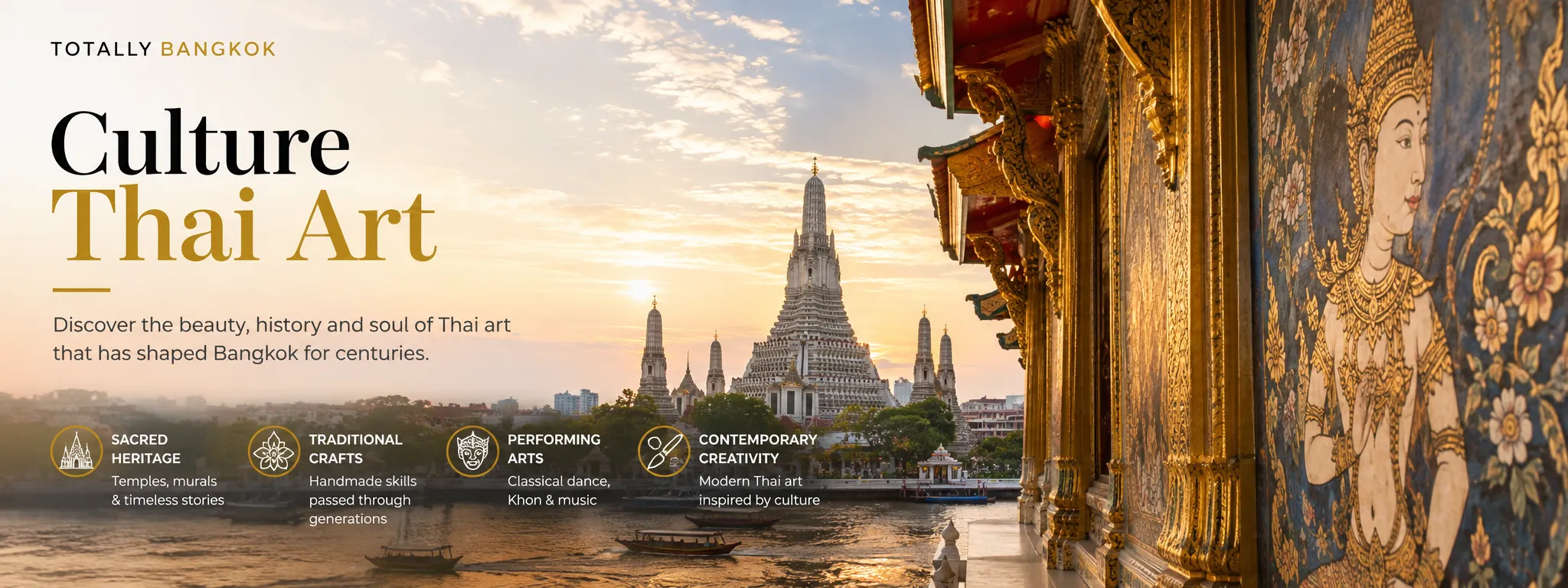
Thai art is almost entirely devotional — murals, sculpture, gilding, and lacquerwork all in service of Buddhism and the royal tradition.
Temple murals depict Jataka tales (the Buddha's past lives) and the Ramakien (Thai Ramayana) — typically clockwise around the interior walls of temple buildings.
Each posture (mudra) has a specific meaning — Maravijaya (touching the earth, defeating Mara) is most common; reclining Buddha represents parinirvana.
Gold represents the divine — the cho fa (spike at roof peak), chedi (stupa), and prangs are all gilded on important temples.
Traditional Thai decorative arts applied to cabinets, doors, scripture chests — best examples in the National Museum and major temples.
The National Museum Bangkok and Jim Thompson House both hold significant collections of traditional decorative arts alongside the murals visible in working temples.
A separate, modern tradition has grown alongside the devotional one — galleries in the Charoen Krung district and the Bangkok Art and Culture Centre showcase contemporary Thai artists reworking traditional motifs.
Scenes generally read left to right and bottom to top, following the narrative sequence of the Jataka tale or Ramakien episode depicted — a useful starting point for making sense of an otherwise dense wall of imagery.