
What the different temple buildings are for, what the objects mean, and how to move through a temple respectfully.
The ubosot (ordination hall) is the most sacred building — monks ordain here; the viharn is for public worship; the chedi (stupa) contains holy relics.
Each posture has meaning — touching the earth (Maravijaya, most common), meditation, blessing, reclining (parinirvana); they are sacred objects, not art.
Bai Sema (leaf-shaped boundary stones) mark the sacred ordination boundary — stepping between them or over them is disrespectful.
Visitors can participate in merit-making — dropping coins in monk's bowls, buying small birds to release, lighting incense — though some of these practices are changing.
Point feet toward Buddha images; sit with feet toward monks; enter the ubosot without invitation; touch or hug religious statues for photos.
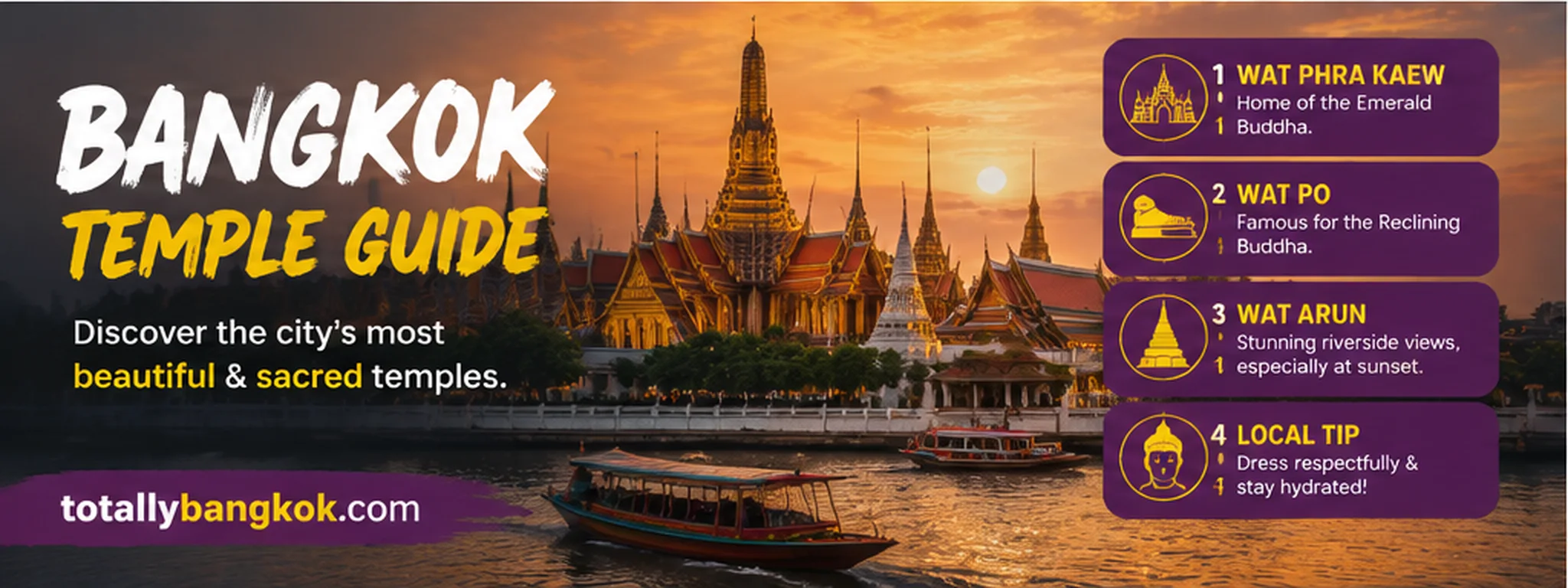
Shoulders and knees covered at every temple, no exceptions — sarongs and wraps are often available to rent or borrow at the entrance for visitors who arrive underdressed.
Shoes always come off before entering any building housing a Buddha image — look for the pile of shoes at the entrance as a clear signal, even without a posted sign.