What Thai body language means — the gestures, the expressions, and the things you're probably misreading.
Thais are known for smiling — but there are at least 13 types of Thai smile with different meanings; not all smiles indicate happiness or agreement; some indicate embarrassment or confusion.
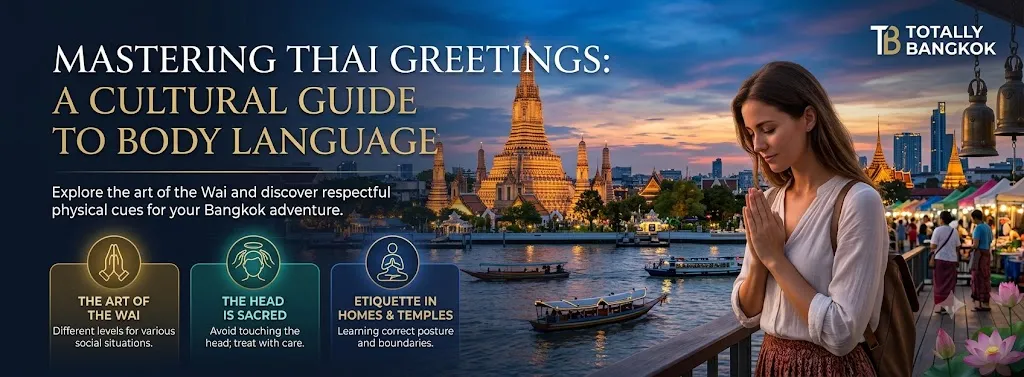
The head is the most sacred part of the body — never touch someone's head; ducking slightly when walking between people shows respect; lowering yourself near elders is polite.
The feet are the lowest and least sacred part of the body — don't point feet at people or sacred objects; don't step over food; remove shoes at thresholds.
Less sustained eye contact is expected than in Western cultures — avoiding direct eye contact with elders or superiors is respectful, not evasive.
Physical contact between acquaintances is more reserved than in many Western cultures — a handshake is fine in business settings, but hugging is generally reserved for close friends and family.
Visible anger or raised voices are considered a loss of face and are rare in public — calm, indirect communication persists even in genuinely frustrating situations, which can be easy to misread as indifference.