
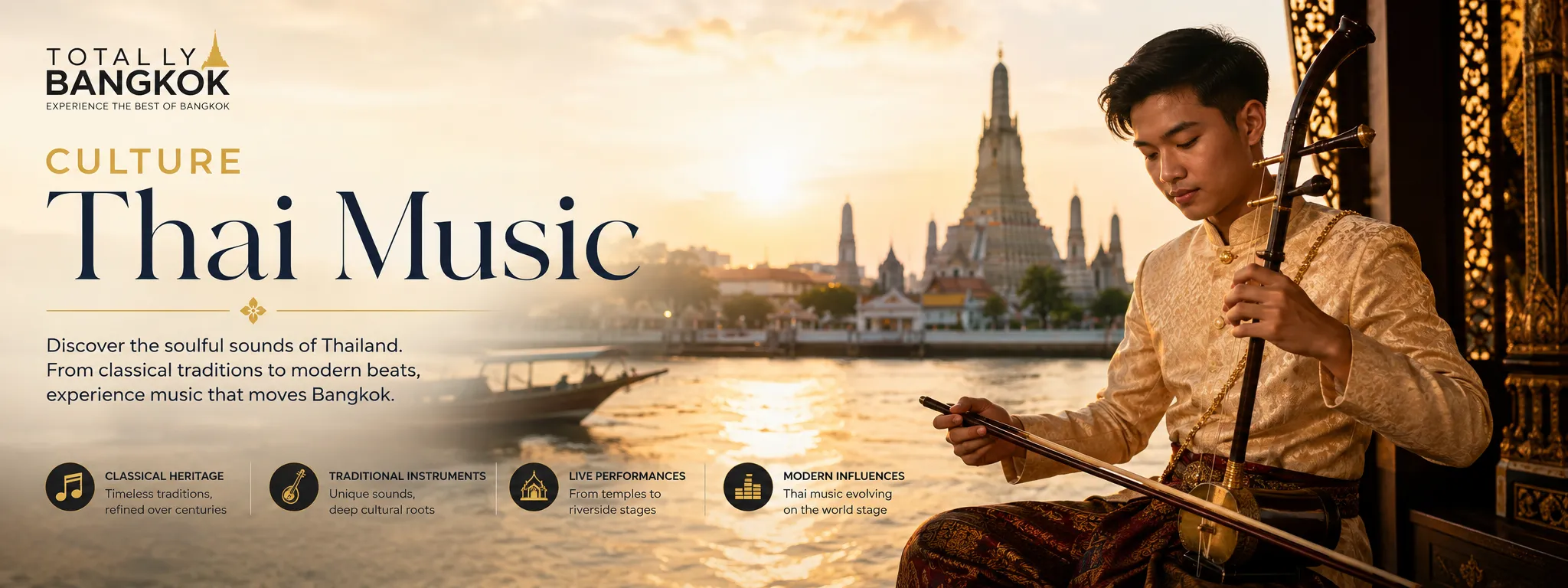
The classical Thai music tradition accompanies everything from Muay Thai bouts to royal ceremonies — what you're hearing and why.
The core classical ensemble — ranat (xylophone), khong wong yai (gong circle), pi (oboe), khlui (flute), and percussion — the music you hear at Muay Thai fights and ceremonies.
String-dominant group using saw duang (spike fiddle), saw u (coconut fiddle), and plucked instruments — softer, more intimate than piphat.
Luk thung (Thai country music, enormously popular in rural areas), mor lam (Isaan folk), and pop (Thai pop/indie) are modern successors — completely different from classical.
Muay Thai fights (live piphat), temple ceremonies, National Theatre performances, Jim Thompson House cultural shows.
The piphat ensemble at a Muay Thai stadium isn't background noise — musicians follow and amplify the rhythm of the fight itself, speeding up as action intensifies, a tradition unique to Thai boxing.
Recordings capture the melodies but miss the physical presence of the instruments and the ensemble's interplay — seeking out a live performance, even briefly, gives a genuinely different sense of the tradition.