
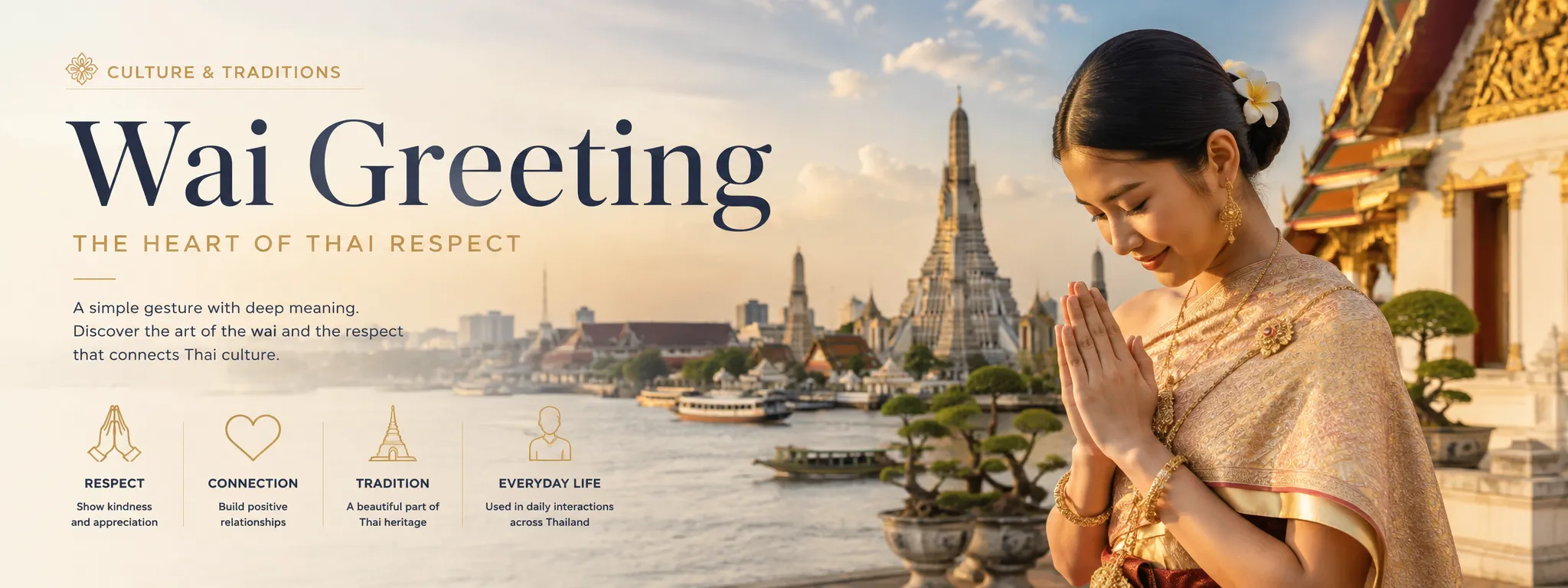
The prayer-hands gesture used to greet, thank, apologise, and show reverence — how it works and when to use it.
Hands pressed together at chest or face level with a slight bow — the height of the hands and depth of bow indicate the level of respect shown.
Greeting people, saying goodbye, saying thank you, apologising, showing reverence to monks or Buddha images.
Don't wai service workers (a smile and nod is fine); monks don't wai back to women (they can't touch women); children wai adults, not the other way around.
7-Eleven and chain restaurant staff are trained to wai customers — you don't need to wai back, a smile or nod is fine.
Palms pressed together at chest height, fingers pointing up, with a slight bow — the higher the hands and the deeper the bow, the more respect is being shown, which is why the gesture looks different when greeting a monk versus a peer.
The younger or lower-status person initiates — as a foreign visitor, you're not expected to wai first in most situations, but returning a wai when offered is both easy and genuinely appreciated.
Service staff (waitstaff, shop assistants) don't expect a wai in return for their own greeting wai — a smile and nod is the appropriate response in that specific context.