
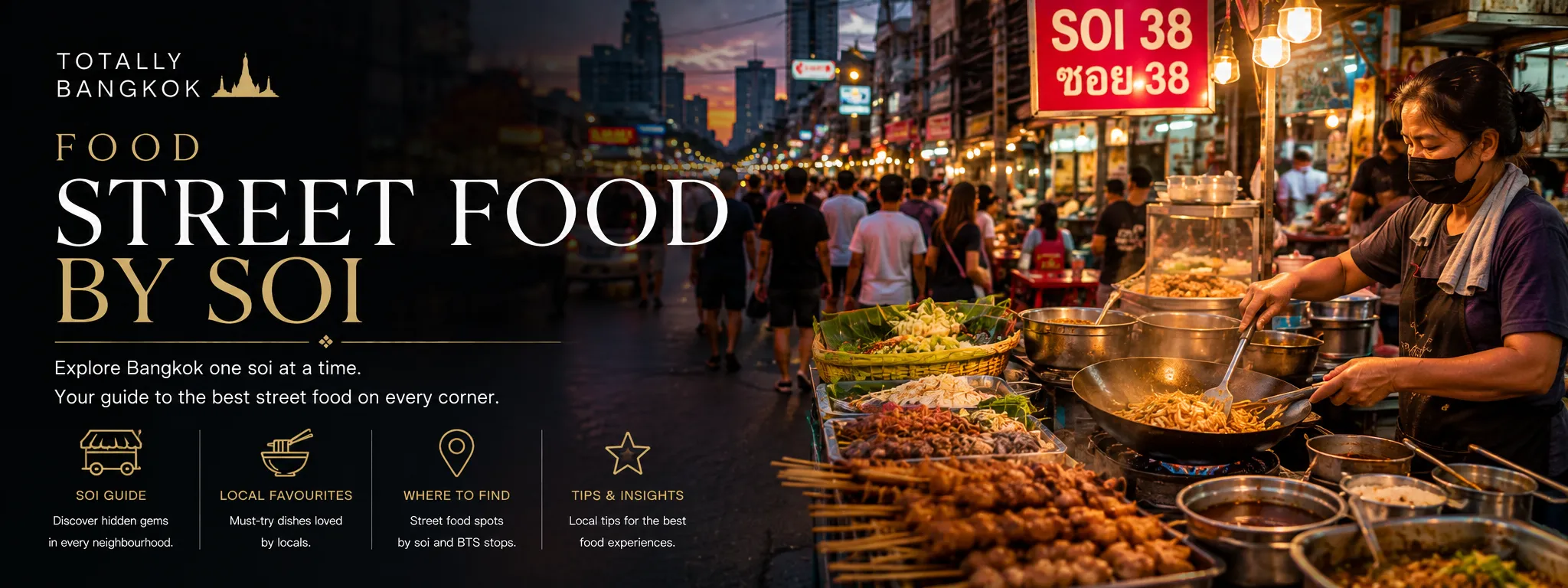
Bangkok street food is not one giant night market. The best approach is to choose a neighbourhood or market that fits your day, then graze through several stalls rather than crossing the city chasing an outdated “famous soi”.
Yaowarat Road and the lanes of Bangkok’s Chinatown remain the obvious first choice for a visitor who wants dense evening street-food energy. Tourism Authority of Thailand describes the district as a major street-food destination that becomes especially lively after normal business hours, when food vendors take over more of the street scene.
Come for a mix rather than a single “best stall”: noodles, seafood, Chinese-Thai dishes, snacks and desserts are part of the appeal. The MRT now makes Chinatown much easier to reach than older guides suggest; use current rail directions and then explore on foot.
Choose Yaowarat when atmosphere matters as much as dinner. It works well for first-time visitors, photographers and groups with different tastes because you can order small portions from several places. The trade-off is crowds. If you hate queues or need a calm seated meal, Chinatown at peak evening time may feel more like an event than dinner.
Keep valuables controlled in dense foot traffic and do not stop abruptly in the middle of narrow pavements to compare reviews. A stall with a queue is not automatically better than its neighbour; turnover, visible cooking and what you actually want to eat matter more.
Nang Loeng is a better fit when you want heritage and daytime eating rather than neon nightlife. Tourism Authority of Thailand describes the market as more than 120 years old and highlights traditional foods and desserts associated with long-running community vendors. Current TAT material lists daytime opening, so this is a market to plan around lunch rather than saving for a late-night crawl.
The appeal is the combination of food and neighbourhood history. Go slowly, look beyond dishes that already dominate social media, and treat the visit as a chance to try older Bangkok flavours in a working market environment.
Wang Lang Market on the Thonburi side of the river is useful when you want a busy local market woven into a sightseeing day. It is close to the river and can combine naturally with a cross-river itinerary rather than requiring a dedicated evening trip across Bangkok.
This is the kind of place where grazing works best: buy one item, walk, look at what is being cooked, then decide on the next. The exact vendor mix changes, which is why a market-first strategy ages better than a rigid list of stalls from an old article.
Talat Noi is often described online as if it were simply a night-food strip, but the neighbourhood is broader than that. Tourism Authority of Thailand’s current Talat Noi material focuses on its historic community, museum, creative spaces and periodic community market activity. Pair food stops with the lanes, shophouses and river-adjacent heritage rather than expecting one continuous row of late-night stalls.
Talat Noi works especially well before or after Chinatown because the two areas are geographically close enough to combine without spending half your evening in traffic.
Older Bangkok travel guides repeatedly send visitors to Sukhumvit Soi 38 as though it were still the definitive street-food destination it was years ago. That advice is a useful warning about how quickly Bangkok food geography changes. Individual vendors move, developments reshape streets, and markets change character.
Use current local information for a specific stall, and use durable districts such as Chinatown or long-running markets when you want a food outing that is less dependent on one cluster remaining exactly as a decade-old blog described it.
Bangkok’s food rhythm starts early. Morning markets, lunchtime office areas and daytime community markets can be just as rewarding as evening stalls. If you spend every day waiting until 7 pm for “street food time”, you miss breakfast noodles, market sweets and lunch vendors serving local workers.
Match the area to its natural time. Nang Loeng is a daytime choice; Yaowarat becomes especially atmospheric in the evening; other neighbourhood stalls may primarily serve commuters or office workers at particular hours.
Look for active cooking, sensible food handling and steady turnover. A busy stall serving a short menu repeatedly can be easier to assess than a huge display of pre-cooked food sitting for long periods. Watch what regular customers order and point politely if language becomes a barrier.
Queues are useful information but not a command. Some famous stalls attract long lines because of social media rather than because every traveller will prefer the dish. Bangkok is too food-rich to spend an hour waiting for something you do not particularly want.
Carry small-denomination baht. Thai QR payments are widespread, but they are not always convenient for foreign visitors without compatible banking, and small stalls may still be effectively cash-first for tourists. Avoid forcing a vendor to break a very large note for a small snack if you can pay with something closer to the price.
Menus with photos are common in visitor-heavy areas. Elsewhere, pointing to the dish or ingredients is normal. If you have a serious allergy, carry a clearly translated explanation rather than relying on an improvised conversation during a busy service.
Do not treat Yaowarat, Wang Lang, Nang Loeng and Sukhumvit as neighbouring food courts. Bangkok is huge. Pick one main food area per outing and combine it with nearby sightseeing. Chinatown pairs with Old Town/Talat Noi; Wang Lang fits river days; Sukhumvit food works naturally when you are already staying or going out along the BTS corridor.
Rail plus a short walk is often more predictable than trying to taxi between several famous eating areas at peak traffic time.
For a short trip, do one evening in Yaowarat for the full street-food spectacle, one daytime traditional market such as Nang Loeng or Wang Lang, and keep the rest flexible around wherever you are sightseeing. That gives you more variety than spending every night travelling to a market somebody labelled “number one”.
Order small portions and share when you can. Bangkok food exploration is better as a sequence of tastes than as a mission to finish one enormous plate before moving on.
Street food should be approached with normal food-safety judgement, not fear. Prefer hot food cooked to order, busy stalls and ingredients that look properly handled. Keep hydrated in Bangkok heat, especially if you are combining spicy food and alcohol. If you have severe symptoms rather than a mild upset, seek proper medical care.
The most durable Bangkok food advice is about areas, timing and how to choose, not pretending a stall list will remain unchanged forever. Tourism Authority of Thailand maintains current destination material for Chinatown and long-running markets, while local conditions can change much faster. Check the current status of any specific stall that would be disappointing to miss, then leave room to discover what is busy when you arrive.