
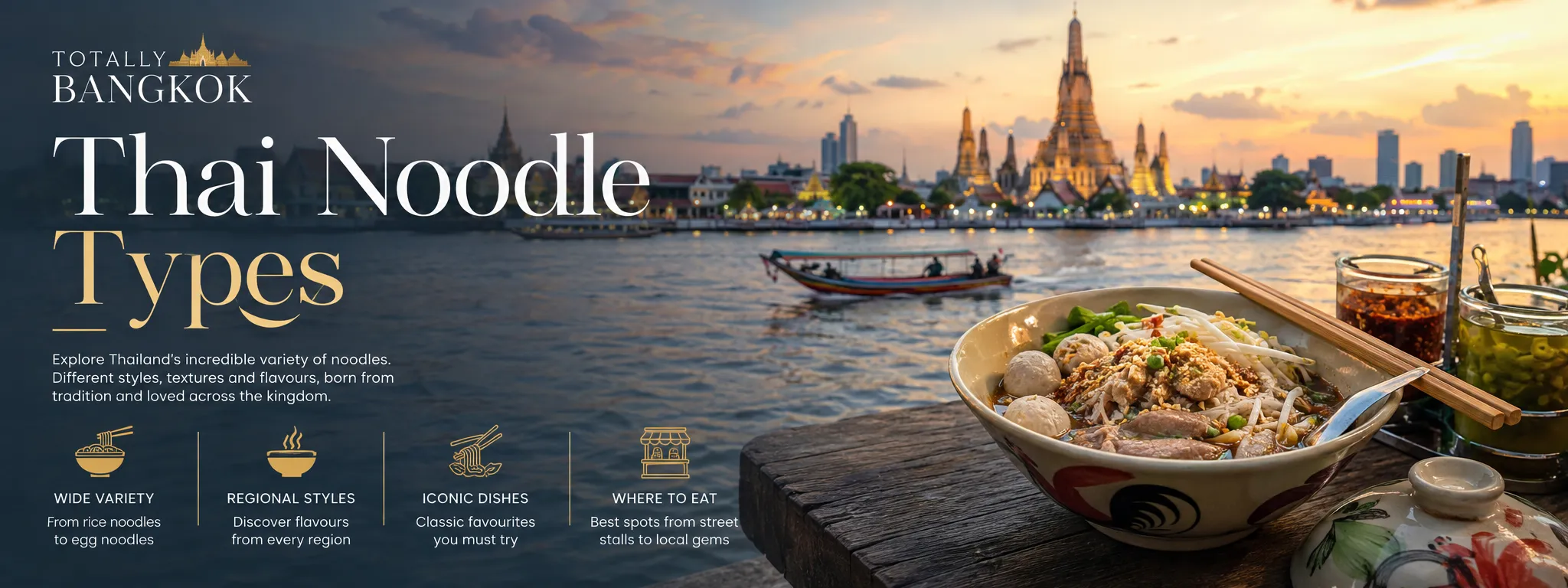
Sen lek, sen yai, ba mee, woon sen — knowing your noodles makes ordering at any stall much easier.
The most common; thin and white when cooked; used in pad thai, noodle soups, drunken noodles; absorbs sauce well.
Broad flat sheets of rice noodle; used in pad see ew and boat noodles; slightly chewy texture; good char potential.
Yellow from egg; springy texture; used in wonton noodle soup and dry noodle dishes; Chinese-Thai in origin.
Clear noodles made from mung bean starch; transparent when cooked; used in yum woon sen salad and some soups; absorbs liquid quickly.
Soft, slightly sour thin noodles made from fermented rice; room temperature; used with curry poured over — see separate guide.
Most stalls specialise in one or two noodle types rather than offering the full range — knowing the name of what you want speeds up ordering considerably at a busy stall.
Springy (ba mee), silky (sen lek), chewy (sen yai), and slippery (woon sen) are useful mental shortcuts for choosing a noodle to match the dish you're craving.