
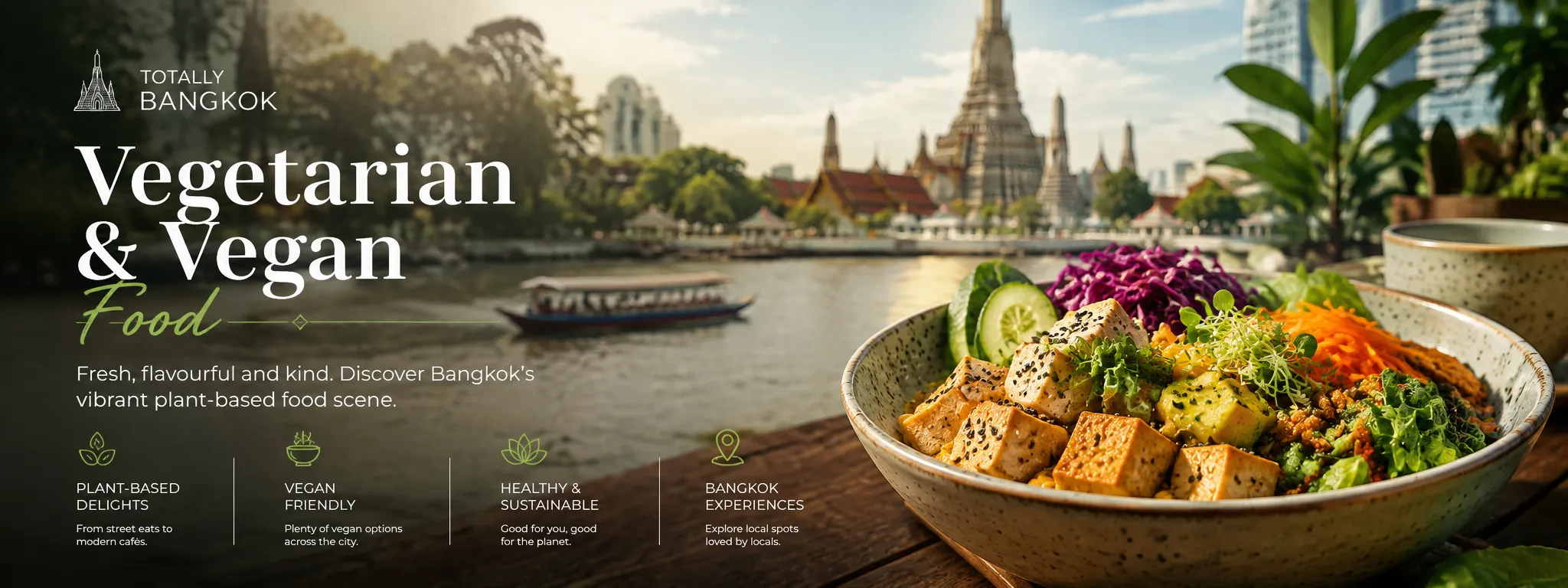
Bangkok is easy for vegetarian and vegan travellers once you understand that a dish without visible meat can still contain fish sauce, oyster sauce, shrimp paste, dried shrimp or meat stock.
Thai “jay” food is a useful starting point because it follows a stricter plant-based tradition and generally excludes animal products as well as several pungent vegetables. A normal restaurant dish described casually as vegetarian may follow a looser definition, so clarify what you need.
Fish sauce is a foundational seasoning and can appear in stir-fries, salads, soups and dipping sauces. Ask specifically for no fish sauce rather than assuming “no meat” covers it. Oyster sauce and shrimp paste are other common ingredients to mention.
Broths can be made with pork, chicken, seafood or dried shrimp even when the bowl is full of vegetables. Curry pastes can also contain shrimp paste. Dedicated vegetarian restaurants are easiest when you need certainty.
Tofu stir-fries, vegetable fried rice, noodles, mushroom dishes, som tam, curries and soups can all be adapted, but the sauce or stock matters. Ask whether the kitchen can make the dish without fish sauce, oyster sauce, shrimp paste, egg and meat stock as relevant to your diet.
Look for the familiar red-and-yellow jay signage, particularly around vegetarian-festival periods and in areas with established Chinese-Thai communities. Dedicated vegan cafés and restaurants are also common in central neighbourhoods.
A street-food vendor may happily remove meat but still use a shared sauce, wok or stock. For ethical preference this may be acceptable to some travellers; for allergy or strict religious reasons it may not be. Decide your own threshold before ordering.
Many Thai dishes use egg, while dairy is less central to traditional savoury cooking but appears in modern cafés, desserts and drinks. If you are vegan, ask about egg as well as sauces. Condensed milk is common in Thai tea and some coffee drinks.
Peanuts, soy, sesame and shellfish are common in Thai kitchens, and shared equipment is normal. A vegan label does not make a dish allergen-safe. Travellers with severe allergies should carry a Thai-language allergy card and emergency medication.
Short, concrete requests work better than a long explanation. Show a translated list of ingredients you cannot eat. Pointing to a dish and asking whether it contains fish sauce, oyster sauce, shrimp paste or egg is often clearer than relying on the English word “vegan”.
Large food courts and markets let mixed-diet groups choose from different vendors. They also make it easier to inspect dishes before ordering. Dedicated vegetarian stalls can sometimes be found alongside mainstream options.
Fruit, rice dishes, soy milk, toast, coffee and modern café breakfasts are widely available, but check milk, butter, egg and sweetened condensed milk if vegan. Hotel buffets can be useful if staff can identify ingredients accurately.
Bangkok has far more plant-based food than one noodle dish. Explore tofu, mushrooms, Chinese-Thai jay food, southern curries adapted without shrimp paste, Isaan vegetables and salads, contemporary vegan restaurants and Indian vegetarian food.
Sukhumvit, Silom/Sathorn, Ari and central mall districts have many dedicated vegetarian or vegan choices, while Chinatown can be rewarding for jay food. In less tourist-oriented areas, a translated ingredient card becomes more useful.
Use one dedicated vegetarian or vegan meal each day for certainty, then experiment elsewhere with clear ingredient questions. Save a few reliable places near your hotel so you always have an easy fallback after a long sightseeing day.
Bangkok is a good plant-based city, but “no visible meat” is not the same as vegetarian. Understand jay food, ask about sauces and stock, and be explicit about egg and allergens. With that small amount of preparation, you can eat widely rather than cautiously.