
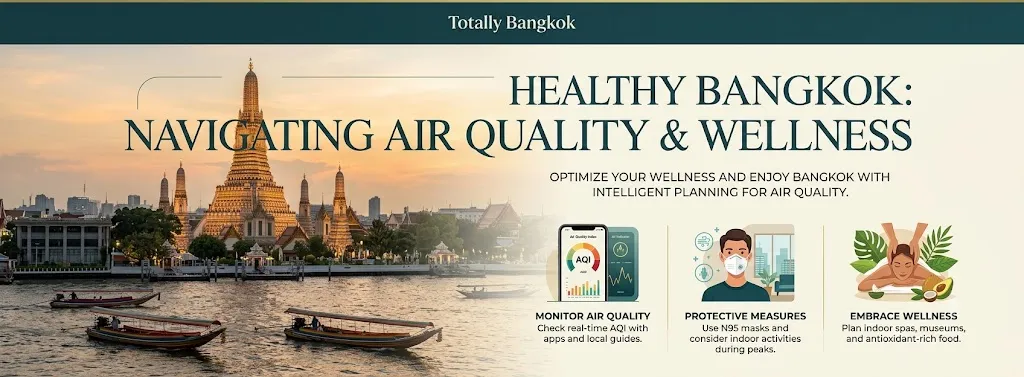
Bangkok's air quality fluctuates significantly — what causes it, when it's worst, and practical protection.
March–May is Bangkok's worst air quality season — hot season stagnant air combines with agricultural burning in northern Thailand; PM2.5 levels can reach hazardous levels.
AirVisual app (now IQAir) shows Bangkok air quality in real time; anything over 150 AQI warrants protection; over 200 AQI means limit outdoor exposure.
During high-pollution days, an N95 or KN95 mask genuinely helps — surgical masks and cloth masks offer minimal protection against PM2.5.
Those with respiratory conditions, elderly visitors, and young children should be particularly cautious during March–May; indoor activities preferred on bad days.
Bangkok's traffic creates baseline pollution year-round — the air is rarely pristine; locals notice but adapt.
Most malls, hotels, and modern offices run air filtration alongside air conditioning — retreating indoors on the worst pollution days genuinely helps, more than just avoiding outdoor exercise.
If flexible on travel dates, visiting outside March–May avoids Bangkok's air quality at its worst — the cool season (November–February) offers both better air and more comfortable temperatures.