
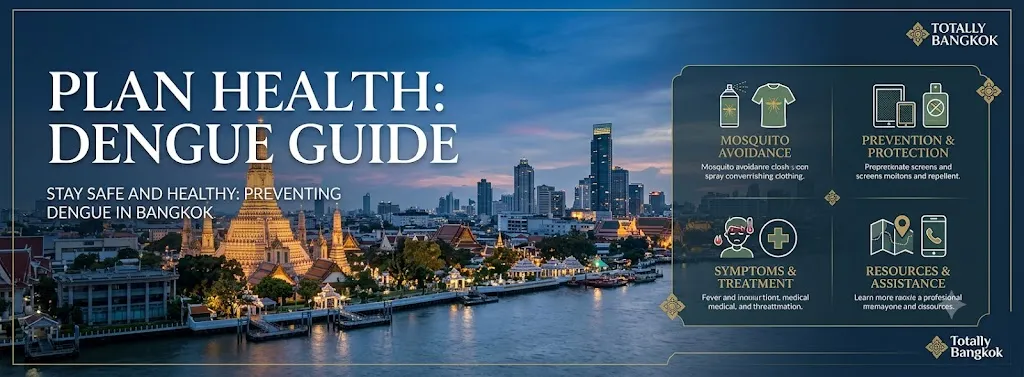
Dengue is a real risk in Bangkok — what it is, how to avoid it, and what to do if you get symptoms.
A viral infection spread by Aedes mosquitoes (day-biting) — symptoms include high fever, severe headache, pain behind eyes, joint and muscle pain, rash.
Dengue cases spike in the rainy season (May–October) — urban Bangkok has lower risk than parks and suburban areas but is not risk-free.
DEET-containing repellent applied in the morning (Aedes mosquitoes bite at dawn and dusk); long sleeves in parks; accommodation with intact screens or air-con.
Seek medical attention immediately — there's no specific treatment but good supportive care matters; Bumrungrad and Samitivej hospitals are experienced with dengue.
Aspirin and ibuprofen can worsen bleeding risk with dengue — paracetamol is the safer choice for fever and pain until a doctor confirms the diagnosis.
Check that windows and doors have intact screens, and consider a plug-in mosquito repellent for the room, particularly for stays outside fully air-conditioned modern buildings.