
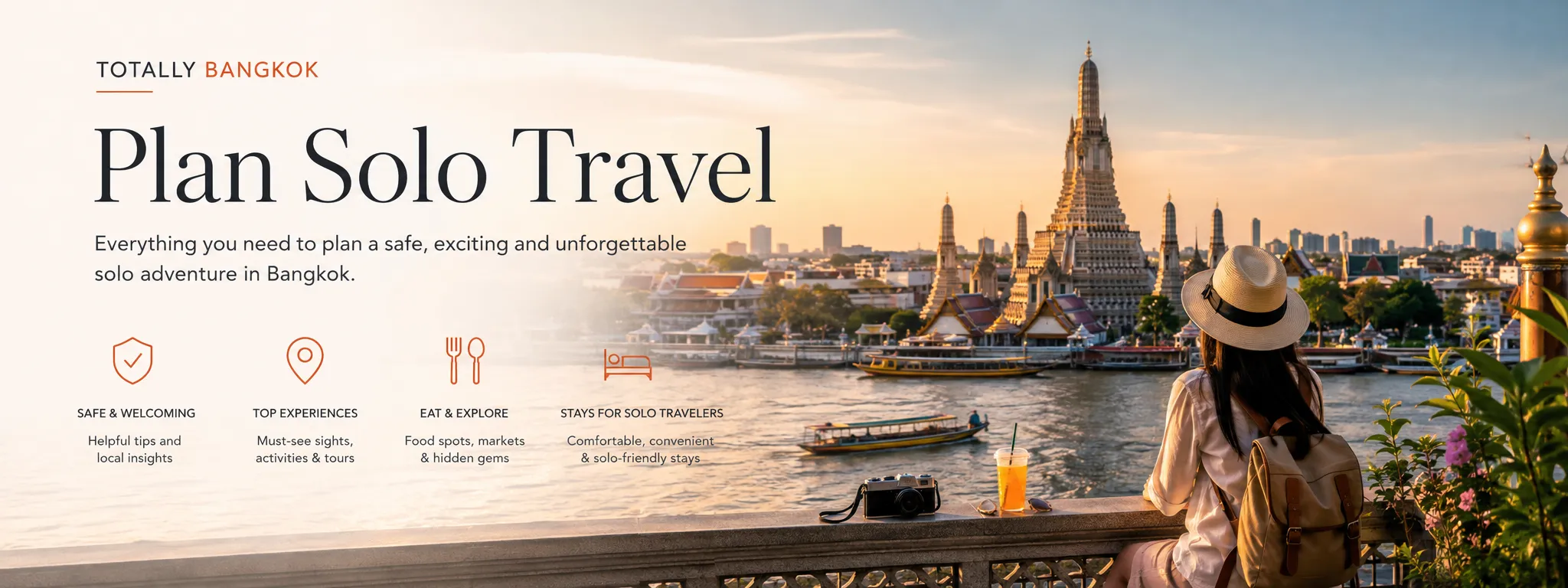
Bangkok suits independent travellers because transport, food and accommodation offer plenty of choice. Solo travel is easiest when you plan for traffic, heat, late-night transport and ordinary city risks instead of relying on blanket claims that the city is either completely safe or dangerous.
BTS, MRT, river services and ride-hailing make it possible to move around without a tour group. Food courts, street stalls and casual restaurants make eating alone normal, while hostels, hotels and serviced accommodation cover almost every budget. You can build a day around your own interests without needing another person to make the logistics work.
A first-time solo visitor usually benefits from staying within an easy walk of BTS or MRT rather than choosing a room purely because it is cheap. A well-connected base makes late returns simpler and reduces dependence on taxis in traffic. Sukhumvit, Silom and other central rail-served areas all have different personalities, so choose for your itinerary rather than for a generic 'best area' label.
Keep control of your phone, passport, cards and cash, particularly in crowded transport, nightlife zones and markets. Do not leave a drink unattended, avoid flashing large amounts of cash and use a hotel safe or secure locker for items you do not need that day. Most trips are uneventful, but sensible habits matter more when nobody else is watching your bag.
Crossing busy roads, riding motorcycles and moving around in heavy traffic deserve attention. Use pedestrian bridges and crossings where practical, look both ways even on one-way streets and do not assume vehicles will yield. Motorbike taxis can save time but offer less protection than rail or a car, especially in rain.
Bangkok can be intensely hot and humid. Carry water, build indoor breaks into long sightseeing days and slow down if you develop dizziness, headache or nausea. On hazy days, check Bangkok's official air-quality information and adjust strenuous outdoor plans if conditions are poor. When travelling alone, tell someone if you become unwell rather than trying to push through.
Be sceptical of a stranger who urgently tells you an attraction is closed, offers an implausibly cheap tuk-tuk tour or steers you towards a gem shop, tailor or special sale. Check opening information yourself and walk away from pressure. A small inconvenience is better than following a stranger into a complicated commission-based itinerary.
There is no useful promise that harassment 'rarely' happens, and women do not need a separate set of patronising rules. The practical approach is the same risk management used in other major cities: choose transport you trust, stay aware in nightlife settings, share a ride or live location when useful, and leave any situation that feels wrong. Temple dress rules apply to all visitors.
Old travel guides often reduce solo men to nightlife scams. The more useful advice is universal: be cautious with anyone who creates urgency around money, drinks, gambling, adult entertainment or an unrequested detour. Check bills before paying and do not hand over a passport as informal security for a bar or service.
Small-group food tours, cooking classes, walking tours, hostel events and activity classes can add social time without locking your whole trip into a group itinerary. Choose organised activities with clear meeting points and reviews, and keep enough flexibility to leave if the atmosphere is not for you.
Bangkok is excellent for solo dining because many meals are designed for quick individual service. Food courts and street stalls remove the awkwardness some travellers feel about taking a full restaurant table, while most sit-down restaurants are perfectly comfortable with one guest. The harder problem is usually deciding what to try next.
Rail services do not run all night. Before a late evening, know whether you expect to return by train, licensed taxi or app-booked car. Keep enough phone battery and mobile data to find your accommodation and book transport, and save the hotel's address in Thai or on a map in case a driver does not recognise the English name.
Store a digital copy of your passport, travel-insurance details and a second payment method separately from your main wallet. Thailand's Tourist Police hotline is 1155 and the service promotes multilingual assistance. For a serious medical or police emergency, use the relevant emergency service rather than relying on social media or a hostel chat group.
You do not need to report every move, but giving a trusted person your accommodation details and rough itinerary makes sense, especially for day trips or late-night plans. If you change hotels or leave Bangkok for several days, update that information. It is a simple backup that does not reduce the freedom of travelling alone.
Group nearby sights, use rail or river transport for the long leg, leave room for a meal or café break, and avoid cramming both sides of Bangkok into one day. Solo travel gives you the advantage of changing plans instantly; use that flexibility when traffic, weather or energy levels make the original plan less appealing.